With the RC Motion 3, a single push performs a flip, a roll, or a 180° drift.
FPV Flight Experience
Goggles 3 pair micro-OLED displays with low-latency video, and Real View PiP shows the world around you without lifting the goggles.
 DJI USA Store


 DJI Avata 2 Fly More Combo (Single Battery)
$849.00
 DJI Avata 2 Fly More Combo (Three Batteries)
$1,019.00
 DJI Avata 2 Safe Flight Combo
 DJI Avata 2 (Drone Only)
$409.00
 DJI Avata 2 Fly Smart Combo (Single Battery)Current
$619.00
 DJI Avata 2 Fly Smart Combo (Three Batteries)
$789.00
 DJI Avata 2 Creator Combo
$1,155.99
 DJI Avata 2 Extended Flight Combo
$1,393.99


 DJI Avata 2
 DJI Goggles 3
 DJI Goggles N3
 DJI RC Motion 3
 DJI Avata 2 Intelligent Flight Battery
 DJI Avata 2 Two-Way Charging Hub
 DJI Sling Bag
 DJI Avata 2 Propellers (Pair)
 DJI Avata 2 Propellers
 DJI Avata 2 Propeller Screw
 DJI Avata 2 Gimbal Protector
 DJI Goggles 3 -2.0D Corrective Lenses (Pair)
 USB-C OTG Cable
 Type-C to Type-C PD Cable
 DJI RC Motion 3 Lanyard
 Screwdriver
 DJI Power 140W GaN Charger
 DJI Power 7A USB-C Digital Display Cable (1 m)
 Lexar Professional 1066x 64GB U3 A2 V30 microSDXC TF Card
 DJI Avata 2 ND Filter Set (ND8/16/32)
At our Shopify store, we prioritize your safety and security. Here's how we ensure a secure shopping experience:
1. Secure Transactions: We use advanced encryption to protect your personal and payment information, ensuring it is safely transmitted and safeguarded.
2. Trusted Payment Gateways: Our store integrates with trusted payment gateways, ensuring your transactions are processed securely and efficiently.
3. Data Privacy: Your privacy is our top priority. We follow strict data protection policies to keep your personal information confidential and secure.
4. Secure Platform: Shopify provides robust security features and continuous monitoring against vulnerabilities, ensuring a safe shopping environment.
5. Verified Merchants: We are a verified merchant on Shopify, committed to providing authentic and high-quality products.
6. Transparent Policies: Our clear return, refund, and shipping policies provide peace of mind, knowing we stand behind our products.
7. Customer Support: Our dedicated customer support team is ready to assist with any concerns or questions you may have.
Shop confidently at our Shopify store, where your safety and satisfaction are our top priorities.
· Primary Products and Payment Structures
Note: Eligibility, availability, and terms may vary by merchant, state, and individual user. The following represents commonly applicable general conditions.
1. Pay in 4 (Four Interest-Free Installments)
Payment Process: At checkout, the customer selects Afterpay and is required to pay the initial installment immediately (typically approximately 25% of the total purchase price, though this percentage may vary). The remaining three installments are automatically charged in fixed amounts every two weeks.
Interest: No interest is charged provided that payments are made on time.
Fees / Late Charges: Late payments may incur late fees; however, total late fees will not exceed 25% of the original order amount.
Eligible Merchants / Goods: Available at participating merchants; supported for online transactions.
2. Pay Monthly (Longer-Term Monthly Installments)
Purpose: Designed for higher-value purchases.
Structure: Upon approval, customers may select a monthly repayment schedule with terms extending up to 24 months.
Interest / Charges: This product constitutes a simple-interest loan; interest (APR) is charged. No origination fees or administrative fees apply, although late charges may be assessed for delinquent payments.
Credit Checks: May involve either a “soft” or “hard” credit inquiry depending on the merchant and transaction amount.
· Key Terms & Important Considerations
1.User Eligibility: Typically requires the customer to be at least 18 years of age, possess a valid U.S.-issued debit or credit card, and satisfy Afterpay’s underwriting, credit evaluation, and ability-to-pay assessment.
2.Authorization for Automatic Payments: The customer must authorize Afterpay to automatically debit the selected payment method (debit card, credit card, or eligible digital wallet).
3.Consequences of Late Payment: If payment is not received by the due date, a grace period of approximately 10 days is usually provided. After this period, late fees may be imposed. Continued non-payment may result in delinquency designations or account usage restrictions.
4.Early Repayment: Customers may prepay installments on both Pay in 4 and certain loan products without incurring prepayment penalties.
5.Refunds / Returns: For merchandise purchased using Afterpay, returns are subject to the merchant’s return policy. Customers remain responsible for outstanding installment obligations; however, merchant refunds will reduce the outstanding balance accordingly.
6.Payment Flexibility: Afterpay offers certain flexibility options, including installment rescheduling and voluntary early repayment.
· State / Merchant Restrictions & Additional Notes
1.Certain products (e.g., Pay Monthly) may not be available in all U.S. states due to regulatory restrictions.
2.Although Pay in 4 is interest-free, delinquency can result in account suspension or reduced spending limits for future transactions.
3.Even where services do not directly affect credit scores, late or missed payments may impact eligibility for future Afterpay usage.
Higher-value or long-term products such as Pay Monthly involve interest; customers should evaluate total borrowing costs before proceeding.
4.The final actual installment bill is subject to the amount shown on the checkout page.


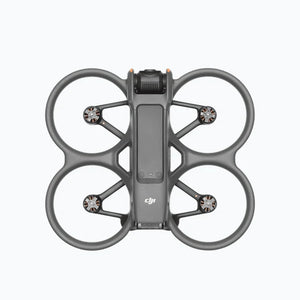
DJI Avata 2 ×1
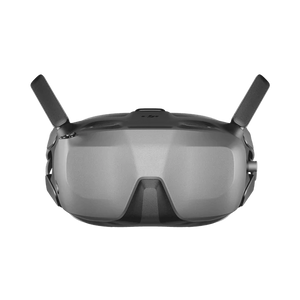
DJI Goggles N3 × 1
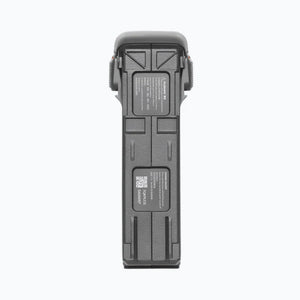
DJI Avata 2 Intelligent Flight Battery ×1
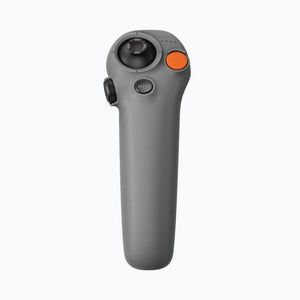
DJI RC Motion 3 ×1
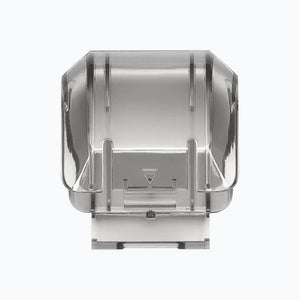
DJI Avata 2 Gimbal Protector ×1
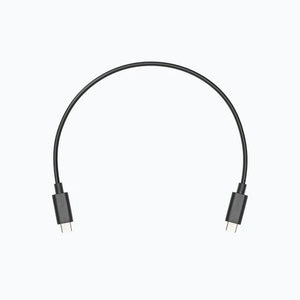
Type-C to Type-C PD Cable ×1
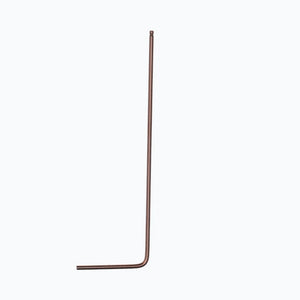
Screwdriver ×1
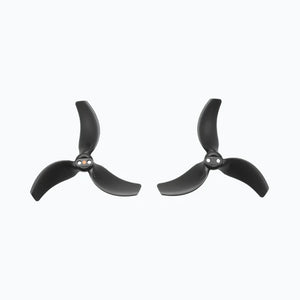
DJI Avata 2 Propellers (Pair) × 2
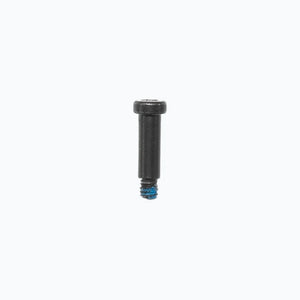
DJI Avata 2 Propeller Screw × 8

DJI Avata 2 is legal to fly in the USA, holding an FCC authorization. It’s one of DJI’s older models that are approved before the FCC Covered List.
The FCC's 23 December 2025 Covered List action applies to new device models. The FCC's fact sheet says authorizations granted earlier stay in place.
DJI USA offers the Avata 2 in eight versions that share the same aircraft. The differences are the goggles, the number of batteries, and the extras in the box. Every version includes a gimbal protector, a Type-C to Type-C PD cable, and a screwdriver.
The DJI Avata 2 is an FPV (first-person view) drone that requires a DJI Goggles series product, a DJI RC Motion series product, or a DJI FPV Remote Controller product to operate. This immersive flight experience captures the fun of freely navigating the environment. DJI Avata 2 offers unique camera angles and an enjoyable, playful control experience, unlike other consumer drones.
The unique recording perspective: With its integrated propeller guard designed for safety, DJI Avata 2 can fly in low-altitude, indoor, and wooded areas or even under bridges and get incredibly close to subjects. These images and videos are from unique angles.
Fun control experience: When paired with DJI RC Motion 3, users can quickly learn to fly without complicated and extensive instructions. There is a beginner’s mode to ensure safety and an Easy ACRO function that adds to the flying fun. When used with DJI FPV Controller 3, users can fly in manual mode (M mode), giving them total freedom to soar through the skies.
It supports M mode (Manual mode)* flying.
* Requires DJI FPV Remote Controller 2 or DJI FPV Remote Controller 3.
1. The light-sensitive area of the image sensor has been increased, which leads to higher sensitivity and significantly better imaging results, also making it more suitable for low-light shooting.
2. The dynamic range of the image sensor has been improved, making it more suitable for scenes with a high dynamic range.
3. EIS has been enhanced. When used with DJI RC Motion 3, RockSteady is enabled at normal shooting angles and video recording at frame rates up to 60fps, resulting in smoother and more stable footage.
4. It supports a 10-bit D-Log M color profile, providing users with more post-processing and video editing flexibility.
Yes, it offers three selectable modes: RockSteady, HorizonSteady, and Off.
* With stabilization turned off, footage captured with the wide-angle view supports Gyroflow offline stabilization .
The default electronic stabilization mode for Avata 2 out of the box is RockSteady. Users can adjust the settings via the Settings > Camera > EIS in the goggles menu.
1. It utilizes a new hardware solution. The aircraft antennas have upgraded from two (2T2R) to four (2T4R).
2. It includes a new frequency band, extending the maximum transmission distance of the high-definition live feed to 13 km*, with up to 60 MHz in communication bandwidth.
3. The maximum transmission bitrate has been increased to 60Mbps.
4. When paired with DJI Goggles 3, the latency is as low as 24 ms for 1080p/100fps live feeds and as low as 40 ms for 1080p/60fps live feeds.
Measured in an unobstructed outdoor environment free of interference. The above data shows the farthest communication range for one-way, non-return flights under FCC standards and is for reference only. Always pay attention to RTH reminders on the goggles screen during your flight.
Differences:
DJI Goggles 3 and DJI Goggles 2 are similar in size and screen display performance. However, Goggles 3 exhibits significant enhancements in
video transmission. When paired with Avata 2, they can achieve a minimum transmission latency of 24 milliseconds.
Upgrades:
Compared to DJI Goggles 2 and DJI Goggles Integra, DJI Goggles 3 innovates with an integrated forehead pad design, offering superior comfort. The new Real View PiP feature enhances safety during takeoff and landing.
DJI Goggles 3 supports live feed sharing via Wi-Fi. You can share the live feed to the DJI Fly app over Wi-Fi and enable live streaming within the app.
Some countries and regions prohibit the use of the 5.1GHz or 5.8GHz frequency band, or both. In some countries and regions, the 5.1GHz
frequency is only allowed for indoor use. If the 5.1/5.8GHz frequency band is unavailable (such as in Japan), screen sharing to a smartphone via Wi-Fi is unavailable. To achieve screen sharing, a wired connection is recommended. Before flying, make sure to check and comply with local regulations.
DJI Goggles 3 comes with a built-in diopter adjustment function, convenient for users from -6.0 D to +2.0 D dioptors. For those outside this range, you can use the combination of the included -2.0 D lenses and frames.
If you require astigmatism correction, or if the built-in adjustment provided lenses are unsuitable, you can purchase additional lenses from an optician and fit them to the goggles.
Compared with the last generation, DJI RC Motion 3 features a reduced overall size, which provides a more comfortable grip and makes it easier to carry. The addition of a dedicated dial enables control over the gimbal pitch and the option to switch between different display modes on the goggles. The accelerator has been redesigned to a two-stop throttle mechanism for a better flight control experience. The new AR cursor and its interaction allow for quick and easy adjustments of various parameters, simplifying the operation process.
Yes — all drones we sell are fully functional and compliant with U.S. regulations, ready for flight just like any other DJI drone.
Yes. There is no nationwide ban on owning or operating DJI drones. Drones that are already in the U.S. and legally sold remain fully legal for purchase and use. We only ship drones that are ready for immediate delivery and operation. For more details, you can read our official statement regarding DJI’s listing on the FCC Covered List here.
Learn More →
We sell eight versions. Drone Only and the Safe Flight Combo include no goggles or controller. The Fly Smart Combos include Goggles N3 and the RC Motion 3, and the Fly More Combos include Goggles 3 and the RC Motion 3, each with one or three batteries. The Creator Combo and Extended Flight Combo add a charger, a memory card and an ND filter set. Our version guide above shows each kit.
The goggles. The Fly Smart Combos include Goggles N3, and the Fly More Combos include Goggles 3 with a lanyard, corrective lenses and a USB-C OTG cable. Both include the RC Motion 3.
FAA rules for flying with video goggles call for a visual observer who keeps the aircraft in sight.
It has downward and backward visual sensors for positioning and no forward sensing, so fly with clear space ahead of it.
Software updates are guaranteed until 31 December 2026.
Up to 8 m/s (17.9 mph) in Normal mode, 16 m/s (35.8 mph) in Sport mode and 27 m/s (60.4 mph) in Manual mode, in no wind at sea level.
1. HDR video is available only with these shooting settings: with EIS off, at a 16:9 aspect ratio and 4K, 2.7K or 1080p at 60, 50 or 30 fps, or at a 4:3 aspect ratio and 4K, 2.7K or 1080p at 30 fps; with EIS set to RockSteady or HorizonSteady, at either a 16:9 or 4:3 aspect ratio and 4K, 2.7K or 1080p at 30 fps.
2. Compared with the DJI Avata.
Not sure the Avata 2 is the right fit? Our buying guides cover the choice in more detail.
Weighing the Avata 2 against the Avata 360? Start here.
Planning to charge away from home?