

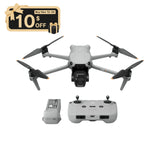


Built around a 1-inch CMOS sensor, the primary camera has a 24 mm equivalent lens and 50MP resolution. With 14 stops of dynamic range[1] and 3.2μm pixels[2], it keeps detail in bright and dark parts of a scene.


DJI Air 3S (DJI RC-N3)
- Regular price
- $1,099.00
- Sale price
- $1,099.00
- Regular price
-
$1,099.00
Shipping calculated at checkout.
- 1" CMOS Primary Camera
- Dual-Camera 4K/60fps HDR Video & 14 Stops of Dynamic Range
- Free Panorama, Seamless and Detailed
- Nightscape Omnidirectional Obstacle Sensing
- Next-Gen Smart RTH With Enhanced Precision
- 45-Min Flight Time, 20km Video Transmission
Choose your configuration
Compare Options
Compare Options
What's Included
DJI Air 3S (DJI RC-N3)
DJI Air 3S Dual Battery Combo
DJI Air 3S Fly More Combo (DJI RC-N3)
DJI Air 3S Fly More Combo (DJI RC 2)
DJI Air 3S Wide-Angle Landscape Combo
DJI Air 3S Extended Flight Creator Combo


Price
USD $1099
USD $1334$1344
USD $1399
USD $1599
USD $1734
USD $1774.99
 DJI Air 3S
x1
x1
x1
x1
x1
x1
 DJI RC-N3 Remote Controller
x1
x1
x1
-
-
x1
 DJI RC 2 Remote Controller
-
-
-
x1
x1
-
 Intelligent Flight Battery
x1
x2
x3
x3
x3
x3
 Battery Charging Hub
-
-
x1
x1
x1
x1
 ND Filter Set (ND8/32/128)
-
-
x1
x1
x1
x1
 Spare Propellers (Pair)
x1
x1
x3
x3
x3
x3
 Type-C to Type-C PD Cable
x1
x1
x1
x1
x1
x1
 RC Cable (USB-C Connector)
x1
x1
x1
-
-
x1
 RC Cable (Lightning Connector)
x1
x1
x1
-
-
x1
 Gimbal Protector
x1
x1
x1
x1
x1
x1
 DJI Shoulder Bag
-
-
x1
x1
x1
x1
 Lexar Professional 1066x 64GB U3 A2 V30 microSDXC TF Card
-
-
-
-
x1
x1
 DJI Air 3S Wide-Angle Lens
-
-
-
-
x1
-
 DJI Air 3 Series Propeller Guard
-
-
-
-
x1
-
 DJI Air 3 Series Low-Noise Propellers
-
-
-
-
-
x1
 DJI Power 140W GaN Charger
-
-
-
-
-
x1
 DJI Air 3S Intelligent Flight Battery
-
-
-
-
-
x1
Shopping Safely
At our Shopify store, we prioritize your safety and security. Here's how we ensure a secure shopping experience:
1. Secure Transactions: We use advanced encryption to protect your personal and payment information, ensuring it is safely transmitted and safeguarded.
2. Trusted Payment Gateways: Our store integrates with trusted payment gateways, ensuring your transactions are processed securely and efficiently.
3. Data Privacy: Your privacy is our top priority. We follow strict data protection policies to keep your personal information confidential and secure.
4. Secure Platform: Shopify provides robust security features and continuous monitoring against vulnerabilities, ensuring a safe shopping environment.
5. Verified Merchants: We are a verified merchant on Shopify, committed to providing authentic and high-quality products.
6. Transparent Policies: Our clear return, refund, and shipping policies provide peace of mind, knowing we stand behind our products.
7. Customer Support: Our dedicated customer support team is ready to assist with any concerns or questions you may have.
Shop confidently at our Shopify store, where your safety and satisfaction are our top priorities.
General Installment Payment Policies for Afterpay
· Primary Products and Payment Structures
Note: Eligibility, availability, and terms may vary by merchant, state, and individual user. The following represents commonly applicable general conditions.
1. Pay in 4 (Four Interest-Free Installments)
Payment Process: At checkout, the customer selects Afterpay and is required to pay the initial installment immediately (typically approximately 25% of the total purchase price, though this percentage may vary). The remaining three installments are automatically charged in fixed amounts every two weeks.
Interest: No interest is charged provided that payments are made on time.
Fees / Late Charges: Late payments may incur late fees; however, total late fees will not exceed 25% of the original order amount.
Eligible Merchants / Goods: Available at participating merchants; supported for online transactions.
2. Pay Monthly (Longer-Term Monthly Installments)
Purpose: Designed for higher-value purchases.
Structure: Upon approval, customers may select a monthly repayment schedule with terms extending up to 24 months.
Interest / Charges: This product constitutes a simple-interest loan; interest (APR) is charged. No origination fees or administrative fees apply, although late charges may be assessed for delinquent payments.
Credit Checks: May involve either a “soft” or “hard” credit inquiry depending on the merchant and transaction amount.
· Key Terms & Important Considerations
1.User Eligibility: Typically requires the customer to be at least 18 years of age, possess a valid U.S.-issued debit or credit card, and satisfy Afterpay’s underwriting, credit evaluation, and ability-to-pay assessment.
2.Authorization for Automatic Payments: The customer must authorize Afterpay to automatically debit the selected payment method (debit card, credit card, or eligible digital wallet).
3.Consequences of Late Payment: If payment is not received by the due date, a grace period of approximately 10 days is usually provided. After this period, late fees may be imposed. Continued non-payment may result in delinquency designations or account usage restrictions.
4.Early Repayment: Customers may prepay installments on both Pay in 4 and certain loan products without incurring prepayment penalties.
5.Refunds / Returns: For merchandise purchased using Afterpay, returns are subject to the merchant’s return policy. Customers remain responsible for outstanding installment obligations; however, merchant refunds will reduce the outstanding balance accordingly.
6.Payment Flexibility: Afterpay offers certain flexibility options, including installment rescheduling and voluntary early repayment.
· State / Merchant Restrictions & Additional Notes
1.Certain products (e.g., Pay Monthly) may not be available in all U.S. states due to regulatory restrictions.
2.Although Pay in 4 is interest-free, delinquency can result in account suspension or reduced spending limits for future transactions.
3.Even where services do not directly affect credit scores, late or missed payments may impact eligibility for future Afterpay usage.
Higher-value or long-term products such as Pay Monthly involve interest; customers should evaluate total borrowing costs before proceeding.
4.The final actual installment bill is subject to the amount shown on the checkout page.


What's Included

DJI Air 3S x1
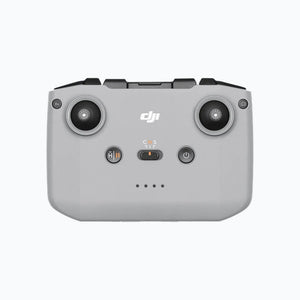
DJI RC-N3 Remote Controller x1

Intelligent Flight Battery x1
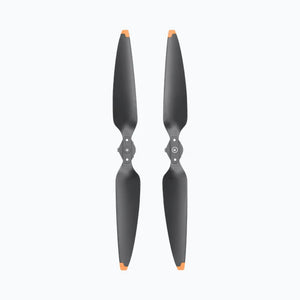
Spare Propellers (Pair) x1
Type-C to Type-C PD Cable x1
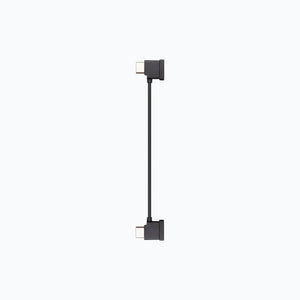
RC Cable (USB-C Connector) x1

RC Cable (Lightning Connector) x1

Gimbal Protector x1
DJI Air 3S Specifications and Compatibility
Specifications
Compatibility
Choosing Your DJI Air 3S Version
DJI USA offers the Air 3S in six versions that share the same aircraft. The differences are the controller, the number of batteries, and the extras in the box. Every version includes a Type-C to Type-C PD cable and a gimbal protector.
Air 3S (RC-N3)
The entry version for pilots who fly with their own phone. In the box:
- Aircraft with 1 battery
- RC-N3 controller with USB-C and Lightning cables
- 1 spare propeller pair

Dual Battery Combo
The entry kit includes a second battery for longer sessions. It has 2 batteries and no hub, ND filters, or bag.

Fly More Combo (RC-N3)
Built for longer days out. It adds:
- 3 batteries in total
- Battery Charging Hub
- ND8/32/128 filter set
- Shoulder bag
- 3 spare propeller pairs in total

Fly More Combo (RC 2)
The same Fly More kit with the RC 2 in place of the RC-N3, so there are no phone cables.

Wide-Angle Landscape Combo
The Fly More Combo (RC 2) kit plus:
- Lexar Professional 1066x 64GB microSDXC card
- Wide-Angle Lens
- Air 3 Series Propeller Guard

Extended Flight Creator Combo
The Fly More Combo (RC-N3) kit plus:
- 1 extra battery (4 in total)
- Lexar Professional 1066x 64GB microSDXC card
- Air 3 Series Low-Noise Propellers
- DJI Power 140W GaN Charger

Is DJI Air 3S Legal to Fly in the USA?
The DJI Air 3S holds FCC authorization and is legal to fly in the USA.
The FCC's 23 December 2025 Covered List action applies to new device models. The FCC's fact sheet says authorizations granted earlier stay in place.
What About DJI Air 3S's Warranty?
As an authorized DJI reseller, DJIUSA sells every DJI Air 3S new and covers it with the DJIUSA New & Authentic Guarantee Plan. If a unit shows prior activation, missing items, or tampered packaging, the plan pays 3x the selling price. If it fails DJI's authentication, the plan pays 5x. You can check your serial number on DJI's device page and review or file a claim on our protection page.
Before Your First Flight
The Air 3S weighs about 724 g (25.5 oz). That is above the FAA registration threshold of 250 g (0.55 lb), so register the aircraft with the FAA before you fly.
Recreational flyers must also pass the FAA's TRUST test. Then check Remote ID and your airspace before every flight.
Let’s Answer Your Questions
DJI Air 3S has comprehensive improvements in the camera system, vision sensing system, intelligent features, and video transmission system. The main improvements include:
- DJI Air 3S is equipped with an upgraded 1-inch CMOS primary camera, utilizing a new image-processing platform with a video dynamic range of up to 14 stops*. It supports up to 4K/120fps video recording**. Additionally, its wide-angle and medium tele cameras support the new Free panorama feature, which allows flexible shooting-range selections.
- DJI Air 3S features new forward-facing LiDAR, supporting nightscape omnidirectional obstacle sensing*** and next-gen Smart RTH. It can actively identify and avoid obstacles, such as buildings along the flight and return paths, ensuring safer urban nightscape photography. It can also memorize flight paths in well-lit conditions, enabling quick takeoffs and safe returns even without satellite signals****.
- DJI Air 3S adopts the O4 video transmission system, offering more stable signals, stronger anti-interference capabilities, and better image quality.
- 14 stops of dynamic range are achievable for video on Auto mode but not for vertical or slow-motion video.
** 4K/120fps video recording is only supported in Slow Motion mode.
*** This feature is only effective on surfaces with discernible textures and in lighting conditions exceeding 1 lux. Refer to the official DJI website or the product's user manual for details.
**** This feature is only effective on surfaces with discernible textures and in lighting conditions exceeding 10 lux. Refer to the official DJI website or the product's user manual for details.
Both the wide-angle camera and medium tele camera support vertical shooting (9:16), and a max video resolution is 2.7K/60fps.
Compared with the camera module of DJI Air 3, DJI Air 3S has the following major improvements:
- DJI Air 3S features an upgraded 1-inch CMOS primary camera, a new image-processing platform to enhance overall image quality, and provides a video dynamic range of up to 14 stops*.
- DJI Air 3S supports slow-motion video recording at 1080p/240fps and 4K/120fps**.
- DJI Air 3S introduces a new Subject Focusing feature, which can quickly and intelligently recognize the subject and maintain continuous and accurate focus.
- The wide-angle and medium tele cameras of DJI Air 3S support the new Free panorama feature, which allows flexible shooting-range selections.
- DJI Air 3S employs next-gen intelligent algorithms to significantly improve photo quality.
- DJI Air 3S increases the video ISO limits: the maximum ISO in normal color mode is raised from 6,400 to 12,800***, and in D-Log M and HLG color modes, the maximum ISO is increased from 1,600 to 3,200.
- 14 stops of dynamic range are achievable for video on Auto mode but not for vertical or slow-motion video.
** Only supported in Slow Motion mode.
*** The maximum ISO for slow-motion video remains at 6,400.
Yes. However, to ensure charging efficiency, we recommended using the DJI 65W Portable Charger, DJI 100W USB-C Power Adapter, or other chargers with a power output of 60 watts or above that support the PD protocol.
Yes — all drones we sell are fully functional and compliant with U.S. regulations, ready for flight just like any other DJI drone.
Yes. There is no nationwide ban on owning or operating DJI drones. Drones that are already in the U.S. and legally sold remain fully legal for purchase and use. We only ship drones that are ready for immediate delivery and operation. For more details, you can read our official statement regarding DJI's listing on the FCC Covered List here.
We sell six versions. The Air 3S (RC-N3) has 1 battery, and the Dual Battery Combo has 2. The Fly More Combos have 3 batteries, a Battery Charging Hub, ND filters, and a shoulder bag, with the RC-N3 or the RC 2. The Wide-Angle Landscape Combo and Extended Flight Creator Combo add a memory card and extra accessories. Our version guide above shows each kit.
The Dual Battery Combo adds one battery to the entry kit. The Fly More Combo (RC-N3) adds two batteries, a Battery Charging Hub, an ND8/32/128 filter set, a shoulder bag and two more spare propeller pairs.
It is the Fly More Combo (RC 2) kit with a Lexar Professional 1066x 64GB microSDXC card, a Wide-Angle Lens, and an Air 3 Series Propeller Guard.
It is the Fly More Combo (RC-N3) kit with a fourth battery, a Lexar Professional 1066x 64GB microSDXC card, Air 3 Series Low-Noise Propellers, and a DJI Power 140W GaN Charger.
The Air 3S has a microSD slot and 42 GB of internal storage. The recommended card list includes Lexar 1066x and Kingston Canvas GO! Plus cards from 64GB to 512GB. We include a Lexar 1066x 64GB card in the Wide-Angle Landscape Combo and the Extended Flight Creator Combo.
Up to 45 minutes of flight and up to 41 minutes of hover in wind-tunnel test conditions at sea level. Real flights vary with wind, speed and temperature.
It senses obstacles in every direction with binocular vision, which needs lighting above 1 lux, and the forward LiDAR measures 0.5-25 m (1.6 ft-82 ft) at night on surfaces with reflectivity above 10%.
Superscripts Explained
* The footage and photos on this page were shot with the DJI Air 3S by professionals who observed local laws and regulations, and edited to varying degrees in post-production. Use them as a reference only; results can differ. Obey local laws and regulations before every flight, and make sure the aircraft has the certifications and airspace authorizations it needs.
** Figures on this page were gathered by testing a production DJI Air 3S in a controlled environment. What you experience depends on your environment, how you use it, and the firmware. The DJI Air 3S must be activated in the DJI Fly app before use.
*** Use ActiveTrack 360° in open areas where possible. For scenarios it doesn't support, or that could interrupt recording, check the user manual. Around many obstacles, be careful with Auto mode for the safety of the flight and everyone nearby.
**** Product visuals on this page, including images, video and screen displays, are for illustration. Actual appearance (such as look, color and size) and screen content (such as backgrounds, UI and illustrations) can vary.
1. 14 stops of dynamic range apply to video in Auto mode, but not to vertical or slow-motion video.
2. This uses QBC (Quad Bayer Coding), which combines four pixels into one. It isn't available for 48MP or 50MP photos.
3. 4K/120fps recording is available only in Slow Motion mode.
4. For nightscape omnidirectional obstacle sensing to work, the surroundings need visible texture and enough light. Around and above the aircraft, surfaces should be textured and lit above 1 lux. Below it, the ground should be textured, diffusely reflective (reflectivity above 20%, such as walls, trees, or people), and lit above 1 lux. Avoid severe weather (winds of 12 m/s or more, snow, rain, lightning, fog), altitudes of 6,000 m (19,685 ft) or more above sea level, and temperatures under -10° C (14° F) or over 40° C (104° F). Never launch from a moving platform such as a car or boat, and stay away from water or snow surfaces that reflect light. If you ignore these limits, the vision system may not work correctly. If the GNSS signal is poor, choose a well-lit, clearly visible area where the surroundings are textured and lit above 10 lux, and the ground is textured and diffusely reflective (above 20%) and lit above 10 lux. Dim conditions can also limit the vision system. Magnetic and radio interference can disturb flight, so avoid places near Wi-Fi hotspots, routers, Bluetooth devices, high-voltage lines, big power transmission stations, radar, mobile base stations, and broadcast towers. When taking off in a desert or on a beach, keep sand out of the aircraft. Fly in open areas, away from crowds. Buildings, mountains, and trees can block GNSS and affect the compass.
5. Memorizing flight paths requires textured surfaces around and above the drone that are lit above 10 lux, and textured, diffusely reflective ground (reflectivity above 20%, such as walls, trees, or people) that is lit above 10 lux. When launching from a balcony, leave at least 2 × 2 meters of clear space and keep the height under 30 meters above ground, so the return home stays safe.
6. Test conditions: the DJI Air 3S flew forward at a steady 32.4 kph with no wind at sea level, with Obstacle Avoidance Action set to Brake and the camera in photo mode, from 100% battery to 0%. Treat the figures as a guide only, and heed the app's prompts on every flight.
7. Test conditions: outdoors, in open space, free of interference and compliant with FCC rules. The numbers describe the farthest one-way, non-return range. Heed the prompts in the app on every flight.
Learn More About DJI Air 3S
Not sure the Air 3S is the right fit? Our buying guides cover the choice in more detail.
DJI Air 3S: What a 1-Inch Sensor Actually Changes for Your Shots
What the 1-inch sensor changes in practice.
DJI Mavic 4 Pro vs. Air 3S: Which Professional Drone Is Right for You?
Weighing the Air 3S against a larger step-up? Start here.